Original Bill of Lading vs Telex Release vs Sea Waybill: Which Is Right for Your Truck Import?
Compare original bills of lading, telex release and sea waybills for HOWO truck and trailer imports. Learn payment risks, carrier release procedures and a shipping checklist.
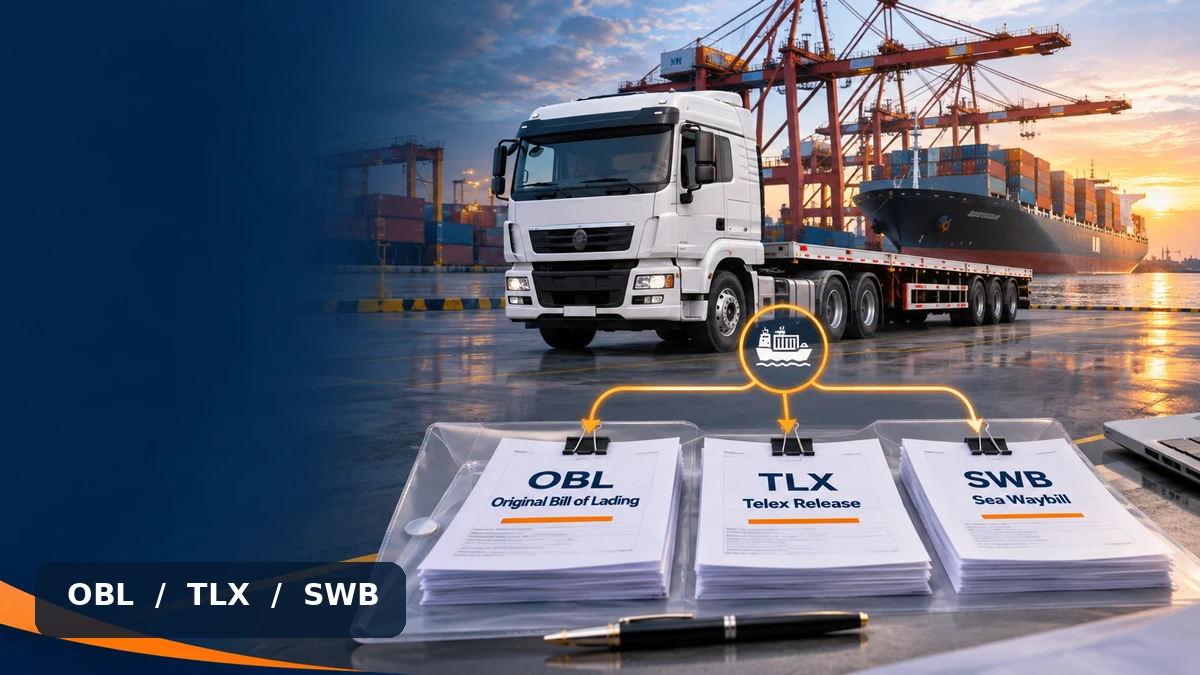
Buyer guide | Updated 12 November 2026
Short answer: An original bill of lading (OBL) can be used to control delivery through possession of a negotiable original document. Telex release is a carrier-authorised way to release cargo without presenting the paper original at destination, generally after the required originals have been surrendered or an accepted electronic process has been completed. A sea waybill (SWB) is a non-negotiable transport document: no original bill of lading is presented to obtain release to the named consignee. None of these automatically clears customs or guarantees that an order has been paid.
If you are buying a HOWO tractor truck, dump truck, semi-trailer or spare-parts container from China, these three terms may appear on your shipping instructions. Here is what each means in plain language, when buyers and sellers tend to use them, and what to check before your shipment reaches port.
First, what is the real difference?
Think of a shipment in three separate stages: the seller receives payment, the carrier authorises cargo release, and the importer clears and collects the cargo. These stages are related, but they are not the same.
| Question | Original B/L (OBL) | Telex release | Sea waybill (SWB) |
|---|---|---|---|
| What is it? | An original transport document; may be negotiable or straight | A release instruction/process for a bill of lading, not a separate type of B/L | A non-negotiable transport document |
| Must the buyer show a paper original at destination? | Usually yes for a negotiable OBL, subject to carrier arrangements | No, once the carrier confirms the required surrender/release process | No; release is to the named consignee after required checks |
| Can the seller rely on original-document possession as one payment control? | Potentially, for a correctly structured negotiable B/L | Not after the carrier has accepted and completed release | Generally no |
| Typical use case | New buyer, documentary collection, or bank-controlled documentation | Paid shipment, or original documents would arrive late | Trusted repeat business and straightforward delivery |
| Main caution | Courier delay, loss, or incorrect endorsement | Never request release before the agreed payment/authorisation | Don't assume holding a copy prevents delivery |
Important: actual rights depend on the B/L wording, banking arrangements, carrier rules and applicable law. A straight/non-negotiable original B/L is not identical to a negotiable “to order” B/L.
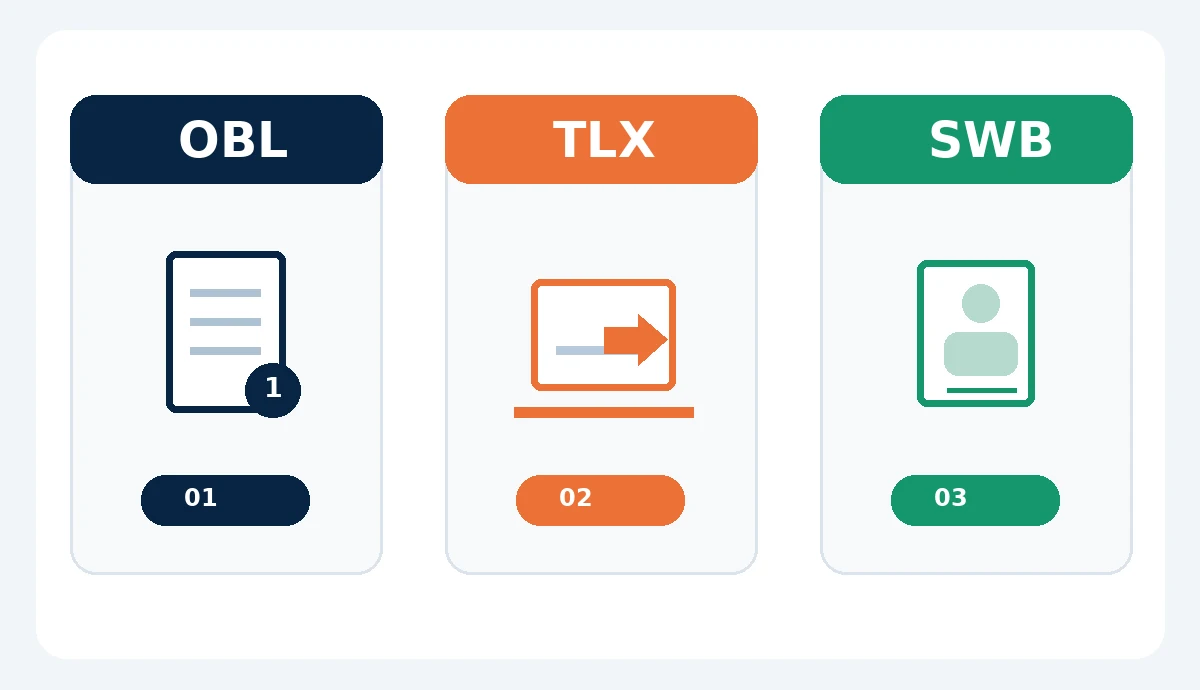
1. Original Bill of Lading (OBL): keeping the document matters
A bill of lading serves as evidence of cargo receipt and the contract of carriage. A negotiable bill of lading can also function as a document of title. When such a B/L is used, the carrier normally requests presentation of an appropriately endorsed original or an approved alternative process before releasing cargo.
Example: A new buyer orders two HOWO 6×4 tractor trucks for shipment to West Africa, with a balance due after inspection. The parties can consider a negotiable original B/L and contract terms governing when the seller or bank releases the documents. However, a B/L alone does not remove non-payment risk: payment terms, consignee wording, carrier conditions and bank instructions must all be aligned.
Best fit: Orders where the contract or bank genuinely requires original documents and documentary control matters.
Watch out: If the vessel arrives before the couriered originals, cargo may incur storage or other destination charges. Verify the number of issued originals and endorsement requirements with the carrier.
2. Telex release: the original-document presentation step is removed
“Telex release” is the familiar name for carrier-authorised release without presenting the original B/L at the destination. In the conventional process, the appropriate party surrenders the required originals to the issuing carrier or completes its accepted electronic surrender process. The carrier then records the release instruction so its destination office can proceed with the consignee's release request.
The key distinction: A PDF marked “telex release” sent by a seller or freight forwarder does not, by itself, prove that the carrier has accepted the surrender. Ask for the actual carrier release status.
Example: A repeat buyer has paid in full for a container of HOWO spare parts bound for Tema, Ghana. If the original B/L was issued and the carrier permits it, the parties might request telex release to avoid waiting for an international courier. They still need to comply with carrier, customs and terminal procedures in Ghana.
Best fit: A shipment for which the release conditions are satisfied and the carrier confirms telex release is permitted.
Watch out: A release request is not the same as a confirmed release. Do not authorise telex release merely because the buyer sends a screenshot of a payment instruction; confirm cleared funds through the agreed banking process first.
3. Sea waybill (SWB): simpler, but not a payment guarantee
A sea waybill is a receipt and evidence of the carriage contract, but not a negotiable document of title. The carrier can release cargo to the properly identified named consignee without collecting a paper original B/L, subject to its release rules, charges and local procedures.
Example: A trusted distributor regularly purchases truck maintenance parts from China and pays according to the agreed terms. If the carrier and destination accept it, a sea waybill may remove unnecessary courier work.
Best fit: Trusted relationships and shipments that do not need negotiable-document control.
Watch out: Do not select SWB if the seller expects to withhold original documents to secure an unpaid balance. Also confirm bank conditions before using SWB with a letter of credit or documentary collection.
Four questions that help you choose
- Has the agreed payment been received and verified? If not, do not casually switch to a release method that removes document-based control.
- Does the bank require a negotiable original B/L? Check any letter of credit, documentary collection or other bank instruction before booking.
- Does the actual carrier and destination port accept this release method? RoRo, breakbulk, container and destination-country procedures can differ.
- Will the documents reach the buyer before the vessel? Balance timing and cost against payment and release risk, not only courier convenience.
A simple starting point is: new, higher-risk order → consider negotiable OBL and banking controls; already-paid order → consider confirmed telex release; trusted routine shipment → consider SWB. This is a decision aid, not a universal legal rule.
The practical release checklist for trucks and trailers
Before the final B/L or waybill is issued, ask your supplier and freight forwarder to check:
- Names: shipper, consignee, notify party, and whether a “to order” clause and endorsements are required.
- Cargo: HOWO model, quantity, accurate cargo description, chassis/VIN or serial numbers where required, and weights.
- Route: port of loading, port of discharge, final place of delivery and carrier/vessel details.
- Documents: commercial invoice, packing list, export declarations and destination-specific certificates or inspections.
- Release: original B/L count, surrender status, release instructions and the carrier's confirmation.
- Destination: freight/local charges, delivery order, customs clearance, terminal appointments, container return and free-time limits where relevant.
- Two-document chains: if a forwarder issues a House B/L while the shipping line issues a Master B/L, check requirements at both levels.
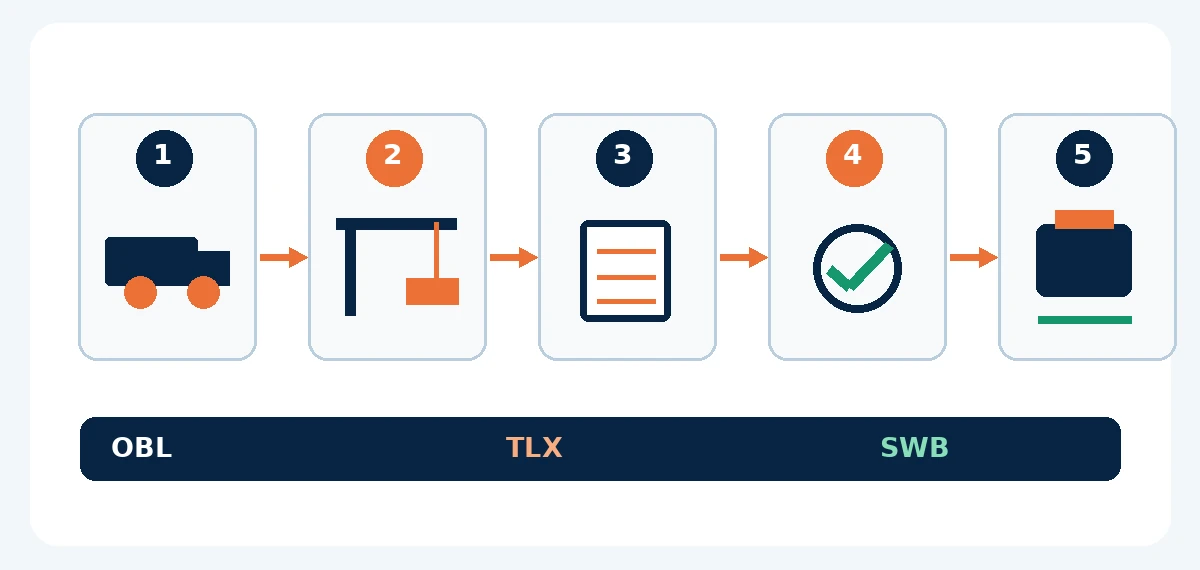
Remember: “Telex release confirmed” does not mean “truck collected.” Release authorisation is separate from customs clearance, taxes, delivery order and terminal handover.
Does FOB or CIF determine which B/L to use?
No. FOB and CIF allocate contractual delivery responsibilities, cost and risk under the agreed Incoterms® rule; they do not, by themselves, decide whether the carrier issues an OBL or SWB or permits telex release. For a FOB booking controlled by the buyer's forwarder, agree in writing on the B/L shipper/consignee wording, who requests release and who pays related charges. Under CIF, the seller may arrange carriage, but the chosen release document must still match the contract and banking requirements.
Common questions
Can I change an original B/L to telex release after the vessel sails?
Sometimes. The issuing carrier may require surrender of the full issued set, an authorised request, fees and confirmation that the destination permits release. If a bank holds or controls the B/L, obtain its approval first. Ask the carrier rather than assuming the change is automatic.
Does telex release mean the buyer has already paid?
No. It tells you something about the carrier's release process, not whether the seller has received the purchase price. The parties must verify payment independently.
Is a sea waybill the same as an electronic bill of lading (eBL)?
No. A sea waybill is non-negotiable. A properly implemented electronic bill of lading may be negotiable under its applicable legal and platform rules. “Digital” does not always mean “sea waybill” or “telex release.”
Which option is safest for a first order?
There is no universally safest document. For a significant first-time purchase with payment outstanding, a correctly structured negotiable original B/L and suitable banking protections may offer useful controls. Discuss the exact payment risk with your bank, carrier and trade adviser.
Can I collect the trucks as soon as the B/L is released?
Not necessarily. You may still need to pay destination charges, obtain a delivery order, complete customs and inspection requirements, and arrange transport from the terminal.
Importing a HOWO truck or trailer from China?
Send us the truck model, quantity, destination country and discharge port. We can discuss a vehicle quotation and help coordinate the shipping-document checklist with your nominated carrier or freight forwarder. Document release and payment terms must be agreed in the contract; carrier and bank rules take precedence.
- HOWO tractor truck models
- HOWO dump truck models
- Semi-trailer models
- Truck and trailer spare parts
- Our real export case studies
- Request a quotation
Related import guidance
- Kenya Advance Cargo Declaration (ACD) for container shipments
- Africa COC certification and pre-shipment documents
Official references and further reading
- Maersk: Difference between Bill of Lading and Sea Waybill
- Maersk: How to surrender a Bill of Lading
- Maersk: Cargo release procedures and electronic release
- CMA CGM: Import documentation and delivery order requirements (example country procedure)
- US International Trade Administration: Trade Finance Guide
Educational shipping guidance, not legal or banking advice. Check the current carrier tariff, country procedure, transport document and contract before shipping or releasing cargo.